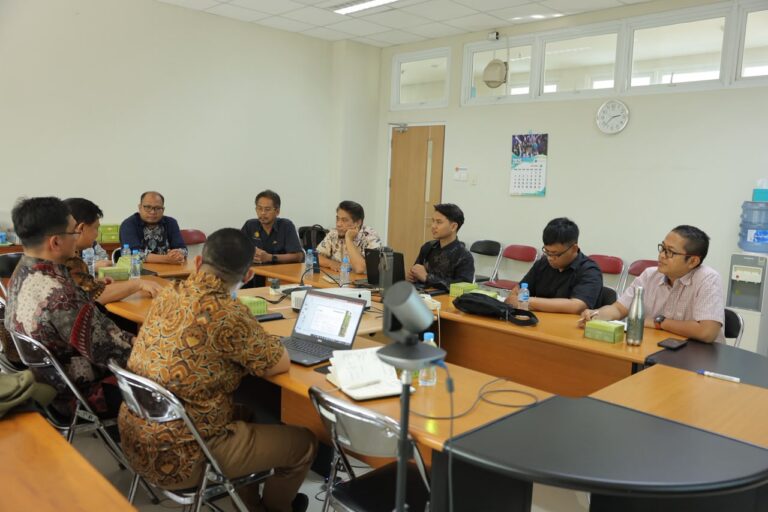
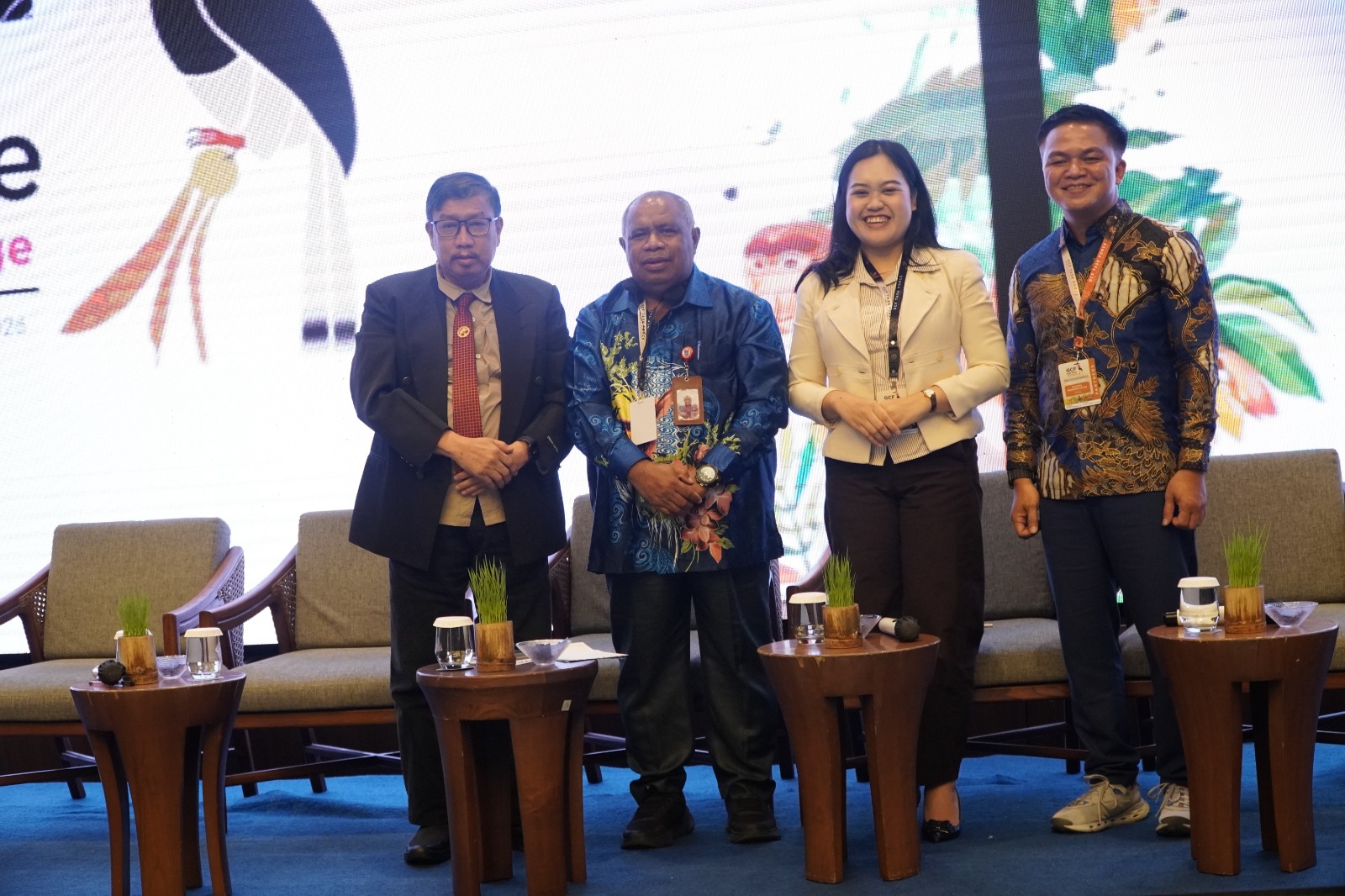
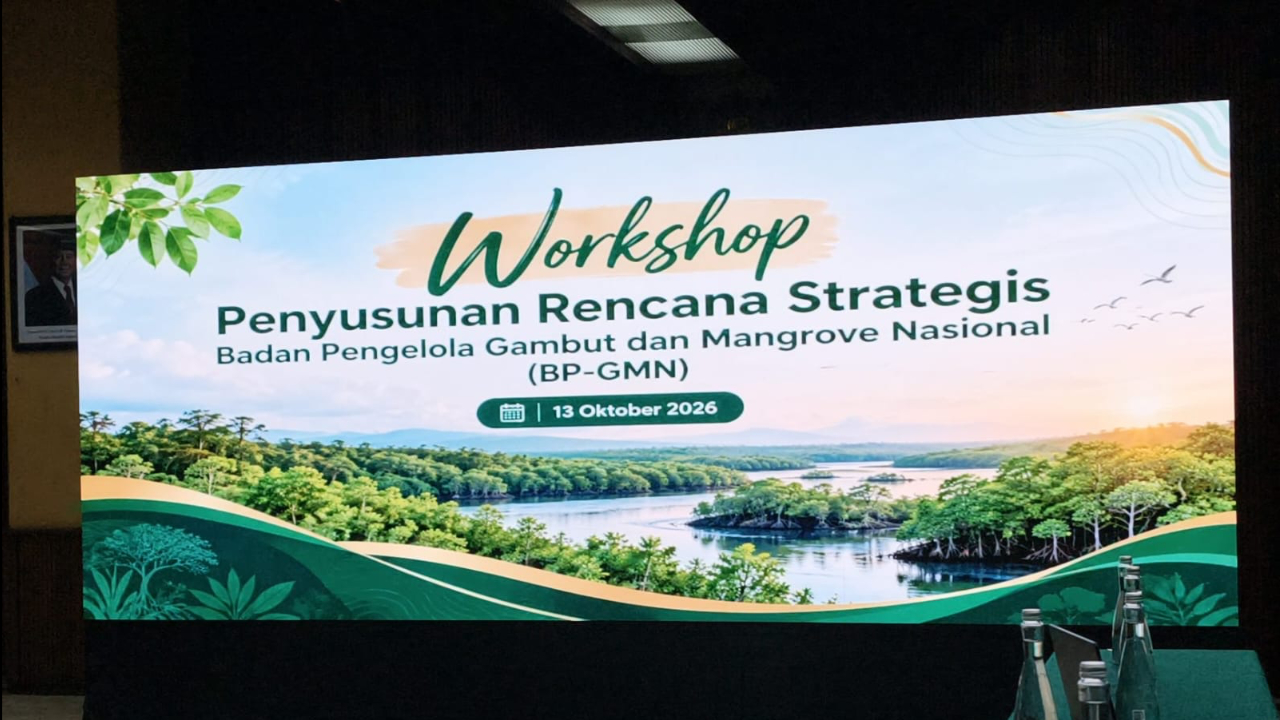
On Tuesday morning, 8 September 2026, the large screen in a meeting room at Novotel Bogor displayed hornbills, tropical trees, and the GCF Task Force logo. West Kalimantan was the host, although the participants were physically gathered in West Java. Perhaps this was one of the most concrete forms of interregional cooperation: West Kalimantan hosted the event, Bogor provided the venue, participants came from several countries, and the issues under discussion recognised no administrative boundaries.
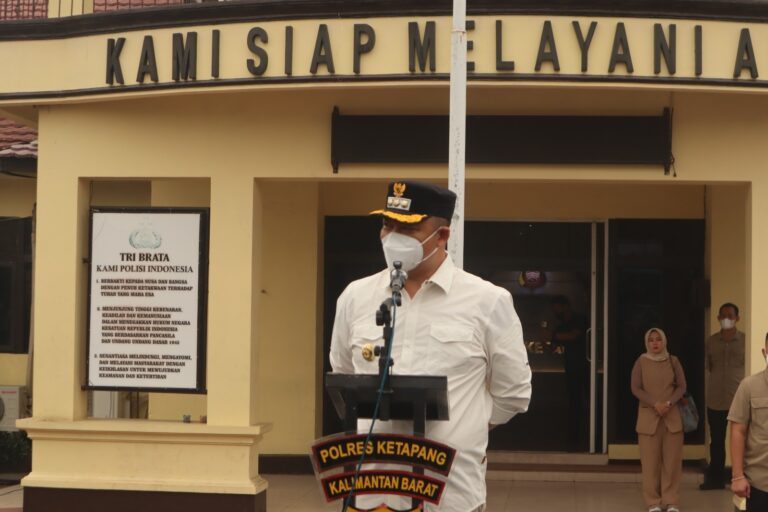
I was assigned to deliver the remarks of the Governor of West Kalimantan, Ria Norsan. The task seemed simple until the microphone was switched on and the room began filling with the names of countries, regional governments, Indigenous Peoples’ organisations, donor agencies, and climate-finance mechanisms. Forests, it turns out, never arrive alone. They bring questions about budgets, permits, commodities, satellite technology, political transitions, Indigenous rights, and even water bills.
Jason And The Unifinished Work
The Director of the GCF Task Force, Jason Gray, opened the proceedings by reflecting on the organisation’s development. The GCF Task Force has grown from 10 jurisdictions to 54 subnational governments across 11 countries. Its members govern more than one-third of the world’s tropical forests. The figure sounds impressive. Jason, however, did not present it as a trophy. He framed it as a responsibility. According to Jason, provinces and states occupy a distinctive position. They are close enough to communities to understand conditions on the ground, while also possessing the authority to change policies, plans, and budgets. Subnational governments connect international agreements with realities in villages.
Jason identified several tasks ahead: strengthening relationships among actors, applying a jurisdictional approach, testing policies, building institutions, expanding networks, and measuring progress.The final task deserves reflection. Many environmental programmes are diligent about launching activities but less disciplined about measuring change. The banners are printed. The group photographs are saved. The forest, however, may not be any healthier.
Baca Juga When Climate Action Enters The Local Goverment Ledger
The New Forest Economy Blueprint presented by Jason connects the bioeconomy, natural infrastructure, restoration, production intensification, and forest protection. The message was clear: conservation must be integrated into how governments organise their economies, rather than treated as an additional activity after production matters have been settled.
Local Goverments Cannot Remain Spectators
The remarks of the Director General of Regional Development at Indonesia’s Ministry of Home Affairs were delivered virtually by Irvan Amirullah. The online connection did not diminish the clarity of his message: regional governments play a central role because many of the powers that determine forest conditions are exercised at the regional level.
The problem is that these powers are dispersed. Forestry intersects with plantations, agriculture, public works, licensing, spatial planning, community development, and disaster management. If every government agency works from its own map and pursues its own targets, conflict is only a matter of time.
Regional governments need to align plans, data, financing, and the division of responsibilities. The private sector brings capital and market access. Universities provide knowledge. Civil society organisations maintain relationships with communities. Governments set the rules and ensure that the public interest is not pushed aside.
Baca Juga Pontianak, Kota yang Terhubung Dengan Dunia Pontianak
A collaborative forum, however, must amount to more than a long invitation list. The Director General stressed the need for governance that is transparent, inclusive, and accountable. Who makes the decisions? Who receives the benefits? Who bears the losses when a policy fails? The answers determine whether a forum actually works or merely consumes a great deal of meeting-room coffee.

Greetings From West Kalimantan
In the Governor of West Kalimantan’s remarks, which I delivered, forests were positioned as long-term development capital. West Kalimantan has tropical forests, biodiversity, carbon stocks, and commodities such as palm oil, rubber, cocoa, coffee, and forest products.
Commodities and conservation are often portrayed as if they must always be in conflict. Reality is more complicated. Production generates income and employment, but production practices that ignore ecological limits transfer their costs to communities through floods, fires, declining water quality, and lost livelihoods.
The West Kalimantan Provincial Government therefore encourages partnerships with the private sector, financial institutions, cooperatives, universities, and Indigenous Peoples. Its approach covers the New Forest Economy, deforestation-free supply chains, peatland management, restoration, and the implementation of the GCF FP248 Programme.
The Governor also emphasised that policy requires reliable data. Conservation investment must be able to explain where activities take place, who benefits, how land cover changes, and what social and economic outcomes are achieved. Following the remarks, the event was officially opened. Applause filled the room. Then the more difficult work began: bringing the experiences of Bolivia, Mexico, Brazil, Indonesia, and Ecuador into one conversation.
Baca Juga Ketika Buruh Ditanya Soal Upah, Negara Harus Bertanya Soal Keadilan
Five Regions, One Question
The first session was entitled “Joining Forces: Restoration and Conservation-Based Enterprises.” Herlina and María Angélica Calvo Kirigin moderated the discussion. They faced no easy task. They had to keep five speakers from five different governmental contexts on the same track and, perhaps even more difficult in an international forum, within their allotted time.
From Tarija, Bolivia, Gonzalo Ávila-Sánchez brought a story about water. The Sama Nature Reserve supplies water to communities and economic activities, including the wine industry. The regional government developed a conservation fund using revenue sources closely connected to residents’ daily lives: one boliviano from each water bill, approximately 120,000 bolivianos per year from the wine industry, and around 500,000 bolivianos in support from the municipal government.
One boliviano may appear insignificant. Gonzalo showed, however, that long-term financing does not always have to begin with a large donor cheque. It can grow from the willingness of water users to pay for natural services that have long been treated as free.
Neyra Concepción Silva Rosado from Yucatán shared the experience of Herencia Maya. She explained the role of civil society coalitions and Maya community production systems. According to Neyra, temporary project funding should build community capabilities, institutions, and income sources that can continue after the project ends.
Her message touched on an old habit. A project arrives with facilitators, training sessions, and forms. When the funding ends, everything else ends with it, except perhaps the banner still hanging in the village hall. Alex Sandro Antônio Marega from Mato Grosso presented another side of territorial management: data, land registration, satellite monitoring, and law enforcement.
Mato Grosso covers more than 903,000 square kilometres. According to the presentation materials, approximately 62 percent of its territory retains native vegetation.
Through the Produce, Conserve and Include, or PCI, strategy, Mato Grosso seeks to increase production on land that has already been cleared, reduce illegal deforestation, and include smallholders and traditional communities in development policies.
Baca Juga OTT di BNPB: Bencana Moral di Tengah Bencana Ekologis
The SIMCAR system and the Cadastro Ambiental Rural connect property boundaries, protected areas, native vegetation, and production activities within a geospatial database. The operational figures presented were specific. In 2025, the government issued 4,197 notices of violation. Approximately 20.3 percent resulted from satellite-based remote inspections, while 79.7 percent followed field inspections.
The presentation also recorded approximately 782 square kilometres of deforestation between August 2025 and July 2026, which was 25 percent lower than in the previous period. The data demonstrate monitoring capacity. However, establishing a causal relationship between stronger enforcement and lower deforestation requires further assessment. Weather, commodity prices, road access, and national policies may also have influenced the change.
Prof. Charlie D. Heatubun then took the participants to the Land of Papua. The Crown Jewel of Papua programme covers approximately 2.6 million hectares and is being expanded to 2.7 million hectares. Its approach connects terrestrial and marine areas because changes on land affect coastal and marine environments.
Charlie placed Indigenous Peoples in the role of decision-makers. Local knowledge needs to work alongside modern science. Knowledge passed down through generations helps communities understand their territories, while biology and ecology provide methods for assessing change.
He mentioned cocoa, coffee, seaweed, ecotourism, and businesses based on natural products as possible economic options. The challenges are considerable. Customary land rights have not been fully clarified, the distance to markets raises costs, and changes in government structures can easily shift political commitments.
Mapping customary territories and identifying business models suited to the social and cultural conditions of each community remain unfinished tasks. Bruno Santiago Paladines Puertas from Ecuador presented the Amazon Future Fund model. Six provincial governments and CONFENIAE, the confederation of Indigenous nationalities of the Ecuadorian Amazon, have developed the Plataforma Amazónica since 2017.
They have worked on territorial planning, provincial protected areas, jurisdictional REDD+ plans, and joint financing mechanisms. According to Bruno’s presentation, approximately 72 percent of the Ecuadorian Amazon outside state-protected areas lies within Indigenous territories. Fund management therefore cannot treat Indigenous Peoples merely as recipients of assistance. They must participate as equal partners in decision-making structures.
The statement was simple, but its political implications were substantial. Those who protect the forest gain a voice in determining the objectives, criteria, and use of funds.
Baca Juga Menghidupkan Koperasi Desa Merah Putih untuk Mengamankan Subsidi Negara
When Insurance Entered The Conservation Discussion
The discussion became livelier when an Indonesian participant raised the subjects of insurance and impact bonds. He also questioned the lack of progress data on Papua’s programmes since 2018 and the risks that changes in regional leadership pose to policy continuity.
The insurance proposal forced the forum to view risk from a different perspective. Forest fires, crop failures, floods, and mangrove degradation create losses that can be calculated. Insurance products, however, require probability data, clear definitions of risk, an allocation of responsibilities, and certainty about who will pay the premiums.
The panellists recognised both the opportunity and the obstacles. The division of authority between national and regional governments can slow action, particularly in areas under national jurisdiction. Jason considered engagement with insurance and reinsurance companies a worthwhile next step for the GCF Task Force network.
Another question came from Nelson Sasarari of South Papua. He raised the issues of special autonomy, Papua’s natural wealth, and the fact that local communities do not automatically gain prosperity from that natural capital.
Charlie responded from policy and academic perspectives. Papua needs development models that reflect the social and cultural conditions of individual communities. Products originating far from markets must have sufficient economic value to cover high distribution costs. He mentioned ecological fiscal transfers, carbon finance, biodiversity finance, and endowment funds as several options under development. His answer offered no shortcut. There is none.
The SDGs Between Forest And Water Bills
Near the end of the session, the moderators asked each speaker to offer one lesson that other regions could apply immediately. Their answers converged on several points: long-term planning, rules that survive changes in political leadership, financing that does not depend on a single donor, verifiable data, and the participation of Indigenous Peoples in decision-making. At this point, the Sustainable Development Goals, or SDGs, became closely connected to the discussion.
Forest protection relates to SDG 13: Climate Action and SDG 15: Life on Land. Community livelihoods connect with SDG 8: Decent Work and Economic Growth. Data transparency and the distribution of authority relate to SDG 16: Peace, Justice and Strong Institutions. Cooperation among governments, Indigenous Peoples, financial institutions, universities, and businesses supports SDG 17: Partnerships for the Goals.
Baca Juga Secangkir Kopi Tanpa Gula, Sebuah Badan Baru, dan Nasib Gambut-Mangrove Kita
These relationships are not automatically harmonious. Production targets may conflict with area protection. Green investment can marginalise customary rights holders when decisions are made only in offices. Carbon credits cannot guarantee prosperity if the flow of benefits stops before reaching communities.
The session ended shortly before lunch. The organisers reminded participants to return at one o’clock after eating at Rati Restaurant. After hours of discussing billions in conservation finance, the instruction everyone understood most quickly was still the direction to the restaurant. Small moments of humour like this keep an international forum human. One image, however, remained in my mind: a forest still standing.
It does not stand because of eloquent speeches or prolonged applause. It survives when one boliviano from a water bill actually reaches conservation work; when satellite data are followed by field inspections; when Indigenous Peoples sit at the table as decision-makers; when budgets remain available after a governor leaves office; and when production generates income without exhausting natural capital.
If these conditions are not met, the forest may still appear green on the large screen. On the ground, it can disappear little by little while we remain busy taking photographs in front of it.
Penulis: Gusti Hardiansyah
Professor at Tanjungpura University
Executive Committee, GCF Task Force Indonesia
*Artikel ini merupakan ruang opini publik. Seluruh isi materi, sudut pandang, dan kebenaran data dalam artikel ini sepenuhnya menjadi tanggung jawab penulis serta tidak mencerminkan sikap, posisi, maupun opini resmi dari redaksi.