Our second day in Sarawak offered lessons that went far beyond simply visiting farms and processing sites. From Gula Apong in Tamburat, to pineapple cultivation on peatland, and finally Pandan Wangi coconut plantations along the coast, I found one common thread: commodities do not automatically create prosperity simply because they can grow and produce well.
Economic value emerges when production is connected with technology, processing, infrastructure, institutions, and markets.
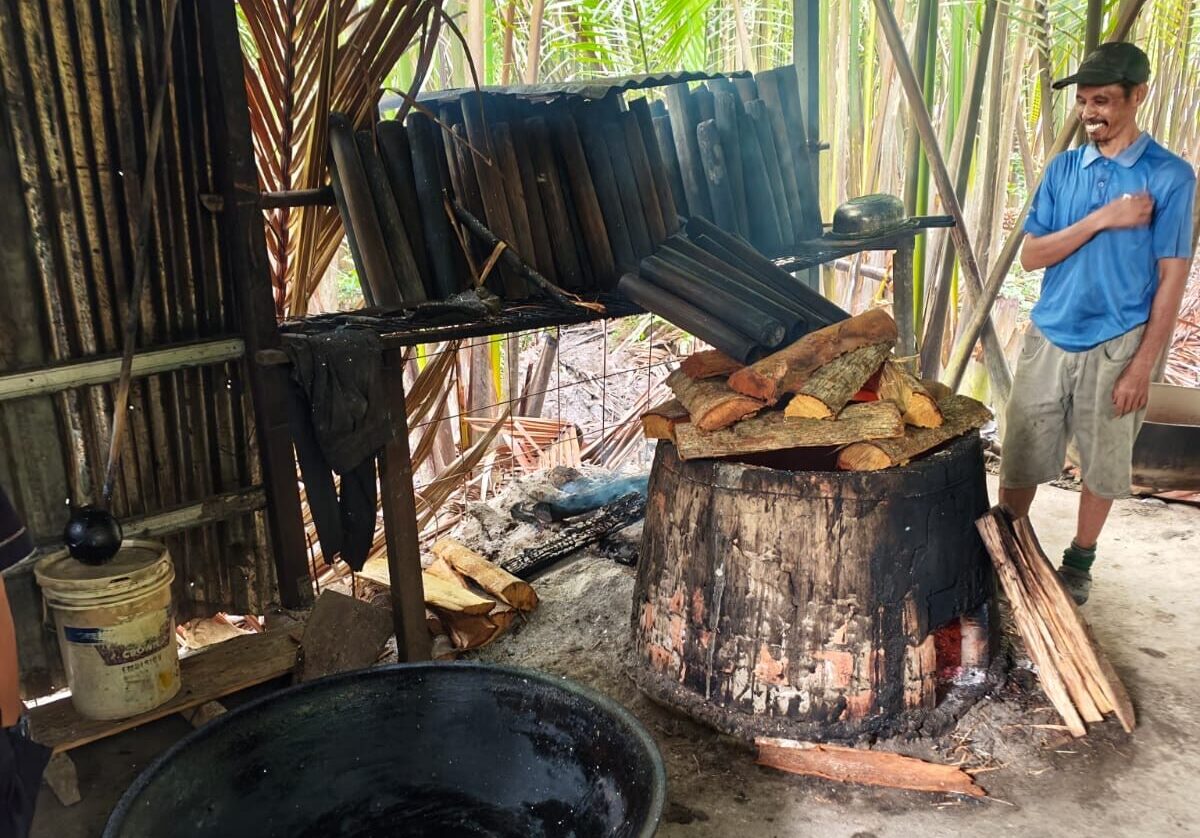
The journey began with nipa palm. Accompanied by the Samarahan Agriculture Department, we observed how nipa palm sap is processed into Gula Apong, Sarawak’s traditional nipa palm sugar. Mr. Azman, one of the producers we visited, explained that his monthly production reaches approximately 350 kg, derived from an area of around 2 hectares with roughly 100 productive nipa clumps.
Baca Juga Dari Gula Apong, Nanas Gambut hingga Pandan Wangi: Belajar Nilai Tambah dari Samarahan
A single cooking pan can handle approximately 15–20 kg. The sap is also filtered to maintain product cleanliness. These figures came directly from our field discussions, so I regard them as field observations, rather than regional production statistics.
What becomes particularly interesting is what happens after the sugar leaves the cooking pan. At the local market managed by the Samarahan Municipal Council, Gula Apong reappears in different forms, including cucur and iced dawet.
This is where value addition becomes visible. Nipa does not remain merely a wetland plant, its sap does not stop as a raw material, and its sugar does not end its journey in the producer’s kitchen.
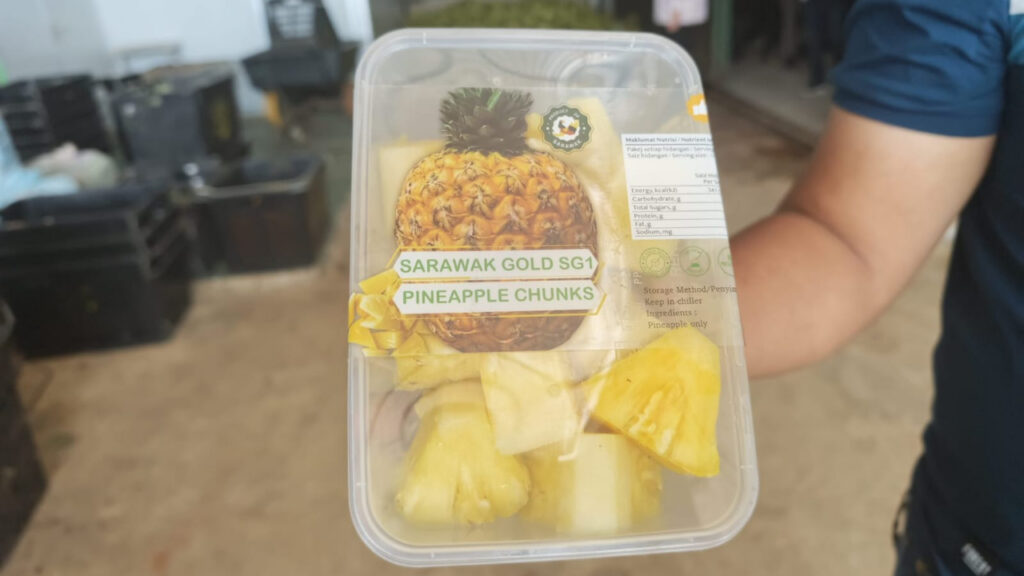
Our next destination was a pineapple plantation on peatland. According to information provided during the field visit, productivity reaches approximately 7.5 tonnes per hectare. Pineapples can sell for up to RM5 per fruit, while production costs were estimated at around RM2 per fruit. The difference, of course, should not immediately be interpreted as net profit because labour, transportation, depreciation, post-harvest losses, and other costs still need to be accounted for.
Here, we observed the development of MD2 and SG1 pineapple varieties with support from the Samarahan Agriculture Department. Our field documentation also showed that the plantation does not operate in isolation.
Baca Juga Lutung di Atas, Es Krim di Bawah: Catatan dari Santubong, Sarawak Delta Geopark
There are production roads, electricity infrastructure, and a vehicle bearing the words “Usahawan LPNM”. Such infrastructure is often overlooked when people discuss the success of an agricultural commodity.
Yet there is an important warning. Pineapples can be planted on a large scale, but when thousands of fruits mature within a relatively short period, the problem immediately shifts from the farm to the market. During our field discussion, one message was particularly clear: pineapple development requires a processing plant. Surplus production needs alternative outlets through juice, jam, or other processed products.
This lesson became even clearer when we arrived at Mr. Simon’s Pandan Wangi coconut plantation in a coastal area. The plantation is situated on mineral soil that tends to be sandy. The coconut palms are approximately eight years old, planted at 5 × 6 metre spacing in a triangular pattern. According to Mr. Simon, the planting materials originated from Teluk Bahru Station in Perak, and approximately 9,000 coconut palms have been established.
Productivity, however, is only part of the story. Each palm reportedly produces an average of 12–13 bunches per year. Harvesting takes place every day, with approximately two-week harvesting rounds because individual palms mature at different times.
The downstream business is even more interesting.
Mr. Simon explained that his distribution operation requires an average of around 1,000 coconuts per day, serving approximately 400 customers with three delivery vans. The wholesale price is around RM5.50 per coconut, while retail prices can reach approximately RM8–10.
Baca Juga A Forest Cannot Be Saved By Applause Alone
According to his business experience, processed coconuts stored under refrigeration can maintain their quality for around three weeks.
He even provides customers with an opener, so the coconuts do not need to be cracked before delivery. His reasoning is straightforward: once the shell is slightly cracked, the coconut water deteriorates more quickly.
If an opener breaks, he replaces it. He also produces his own promotional banners. This is no longer simply farming. It is about building an integrated value chain from the plantation to the consumer.
Then we tasted the coconut ourselves.
It is called Pandan Wangi, and its aroma speaks for itself. Once the coconut is opened, a distinctive pandan fragrance emerges. Its water is refreshing, accompanied by an aromatic character that distinguishes it from ordinary young coconut. At that moment, we understood that product differentiation is not merely a marketing concept. Taste, aroma, quality, and consumer experience can all be translated into economic value.
Mr. Simon then made a simple statement that became perhaps the most important lesson of our visit:
“Most importantly, planting is no issue. Harvesting is no issue. Selling.”
Baca Juga Hutan yang Tidak Cuku Diselamatkan dengan Tepuk Tangan
He continued:
“If you don’t know how to sell, the middlemen will take the profit.”
Those words deserve to be brought home to West Kalimantan.
We came to Samarahan to observe Gula Apong, pineapples on peatland, and Pandan Wangi coconuts, but we returned with lessons about value chains. For Kubu Raya and other coastal areas of West Kalimantan, Pandan Wangi coconut deserves to be tested.
However, the plantation we visited grows on sandy mineral soil, whereas some potential sites in our region contain slightly peaty soils. Replication should therefore begin with an adaptation demonstration plot, rather than immediate large-scale expansion.
The question must therefore be reversed. It should no longer be: how many hectares can we plant?
Instead, we should ask: how much can the market absorb profitably, how can we process the surplus, and how much of the final value actually returns to the farmers?
From Samarahan, that is the knowledge we bring home, far more valuable than simply returning with fruit.
Baca Juga Karhutla Jangan Menunggu Asap: Dari Mikrofon Satukata, Mari Menjaga Gambut
Penulis: Gusti Hardiansyah
Guru Besar Universitas Tanjungpura
*Artikel ini merupakan ruang opini publik. Seluruh isi materi, sudut pandang, dan kebenaran data dalam artikel ini sepenuhnya menjadi tanggung jawab penulis serta tidak mencerminkan sikap, posisi, maupun opini resmi dari redaksi.